

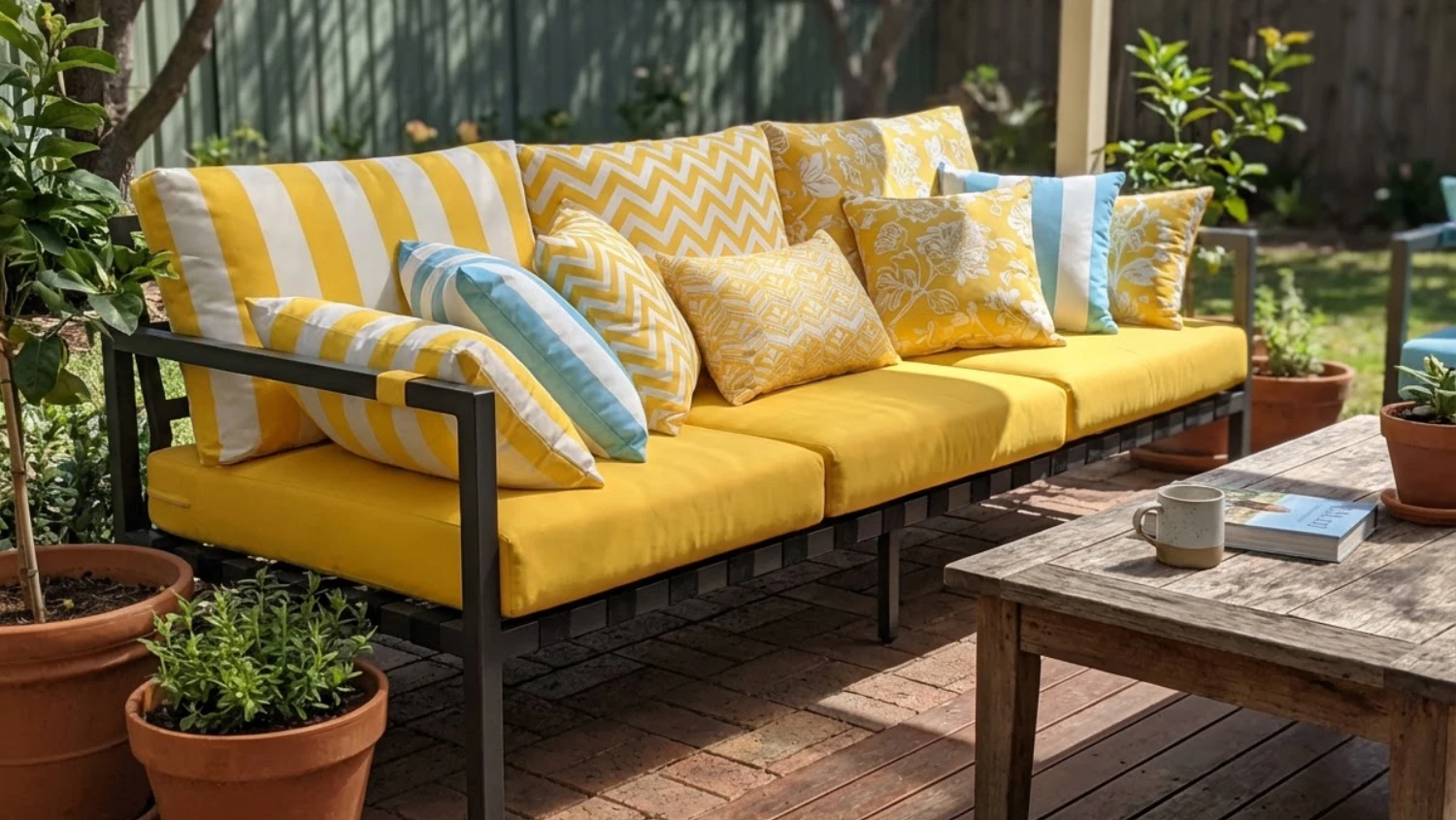
It’s easy to get caught up in the excitement of new outdoor furniture. You spend hours choosing the perfect fabric for your custom cushions, debating between a teak or metal frame, and envisioning the sunset dinner parties you’ll hose. But there is a less glamorous side to owning beautiful outdoor pieces that every Los Angeles homeowner eventually has to face: maintenance.
Here in Southern California, we are blessed with incredible weather, but that same sunshine is brutal on textiles and materials. UV rays act like a slow bleach, while our occasional rains and the constant settling of city dust or smog can turn a vibrant patio set drab surprisingly fast. We see it all the time in our workshop—clients bring in cushions that have only been outside for two seasons but look like they’ve aged ten years.
Protecting these pieces isn’t just about keeping them looking good; it’s about structural integrity. Whether you have custom-made slipcovers we crafted for you or a high-end set you bought elsewhere, a little proactive care goes a long way.
Understanding the Enemies of Outdoor Upholstery
Most people think rain is the biggest threat to outdoor furniture. While moisture causes mold and mildew, the sun is actually the more silent, constant destroyer. Photodegradation caused by ultraviolet light breaks down the chemical bonds in fabrics and even some plastics. This is why you might notice your bright navy cushions turning a dusty purple or grey over time.
Even high-performance fabrics like Sunbrella are not invincible. They are resistant, absolutely, but no fabric exists that is completely immune to the elements forever.
Then there is the issue of particulate matter. In Los Angeles, we deal with a unique mix of ocean mist (salt), pollen, and urban dust. When this mixture settles on your cushions and morning dew or light rain hits it, it creates a grime that embeds itself into the weave of the fabric. Once that dirt is in the fiber, it acts like sandpaper, wearing the material down every time you sit on it.
The “Cover or Store” Debate
The absolute best way to protect your furniture is simple, though sometimes tedious: cover it when you aren’t using it. We know, nobody likes wrestling with giant vinyl tarps every time they want to sit outside for ten minutes with a coffee. However, high-quality furniture covers are the single best investment you can make after buying the furniture itself.
You don’t need to cover them every single night during the dry season, but if you know you won’t be using the patio for a week, or if the forecast predicts one of our heavy winter rains, put the covers on.
Breathability is key here. Avoid cheap, completely plastic tarps from the hardware store. Those trap heat and moisture inside, which basically creates a greenhouse for mold. You want covers made from breathable, water-resistant polyester or canvas that allows air to circulate while keeping the water out. If you have custom-shaped furniture, standard covers might not fit well. A poorly fitting cover that flaps in the wind can actually beat up the corners of your furniture.
If you don’t want to use covers, consider storage. If you have a garage or a shed, moving the cushions inside during the rainy season (usually late winter/early spring) will double their lifespan. You can leave the frames out—teak, aluminum, and wrought iron can handle the weather much better than the soft goods can.
Routine Cleaning is Not Optional
Waiting until your furniture looks dirty to clean it is a mistake. By the time visual stains appear, the dirt has already settled deep. We recommend a light maintenance routine that is much easier than a deep scrub.
Once a month, take a soft-bristle brush or just a dry towel and dust off your cushions, chair arms, and table bases. Get the loose leaves and dust off before they get wet. If you have a leaf blower, that works wonders for getting debris out of the crevices of wicker or deep seating.
For the fabric specifically, a mild cleaning solution works best. You don’t need harsh chemicals. A mixture of clear dish soap and lukewarm water is generally safe for most outdoor textiles. Sponge it on, let it soak for a moment, and rinse thoroughly.
Important note regarding foam: If your cushions do get soaked through to the core, you must dry them properly. Stand the cushions up on their zippers (vertically) so the water can drain out. If they lay flat, the water pools in the middle of the foam, sits there, and eventually rots the material from the inside out.
Refreshing vs. Replacing
Sometimes, despite your best efforts, the sun wins. The fabric fades, or a stubborn stain just won’t come out. This is where many homeowners make the mistake of throwing out the entire piece of furniture.
If you have a high-quality frame—solid wood, heavy wrought iron, or sturdy aluminum—do not throw it away just because the cushions are tired. The frame is the expensive part! This is exactly what we specialize in. We can strip down the old, faded material and create entirely new custom cushions using fresh, high-performance fabrics.
We can often improve upon the original comfort as well. Mass-produced furniture often uses lower-density foam that flattens out after a year or two. When we reupholster or create new cushions, we use high-resilience foam wrapped in Dacron, designed specifically to hold its shape and withstand daily use. It’s often cheaper than buying a comparable new high-end set, and you get to pick the exact color and texture you want.
Material Specifics: Wood and Metal
While upholstery needs the most love, don’t ignore the hard surfaces.
- Teak and Hardwoods: Teak will naturally fade to a silvery-grey patina. Some people love this look. If you prefer the warm honey color, you need to apply a teak sealer (not oil, which can encourage mildew) once a year.
- Wrought Iron: Inspect for scratches. If the paint chips and exposes the metal, rust will start immediately. Touch up chips with auto paint or rust-inhibitor paint as soon as you see them.
- Wicker (Synthetic): Most modern wicker is a synthetic resin. It’s tough, but it can become brittle in intense heat. Keeping it shaded or covered when not in use prevents cracking. If you have natural rattan, it really shouldn’t be fully exposed to the elements at all; keep natural rattan on covered porches.
Planning Your Outdoor Space for Longevity
If you are just starting to design your patio, think about placement. The orientation of your yard matters. Furniture placed in a spot that gets blasted by the harsh afternoon sun (western exposure) will degrade twice as fast as furniture in a morning-sun spot.
Use shade to your advantage. A well-placed cantilever umbrella or a pergola doesn’t just keep you cool; it acts as a permanent shield for your upholstery. If you have trees, be mindful of what drops from them. Sap, berries, and bird droppings are highly acidic and stain quickly.
We love seeing our Los Angeles clients enjoy their outdoor spaces. It’s a big part of why we live here. By taking these few protective steps, you ensure that your patio remains a relaxing retreat rather than a source of stress and extra work. And remember, if your current setup is looking a little tired, you rarely need to start from scratch. Sometimes a new set of professionally crafted cushions is all it takes to make the backyard feel brand new again.